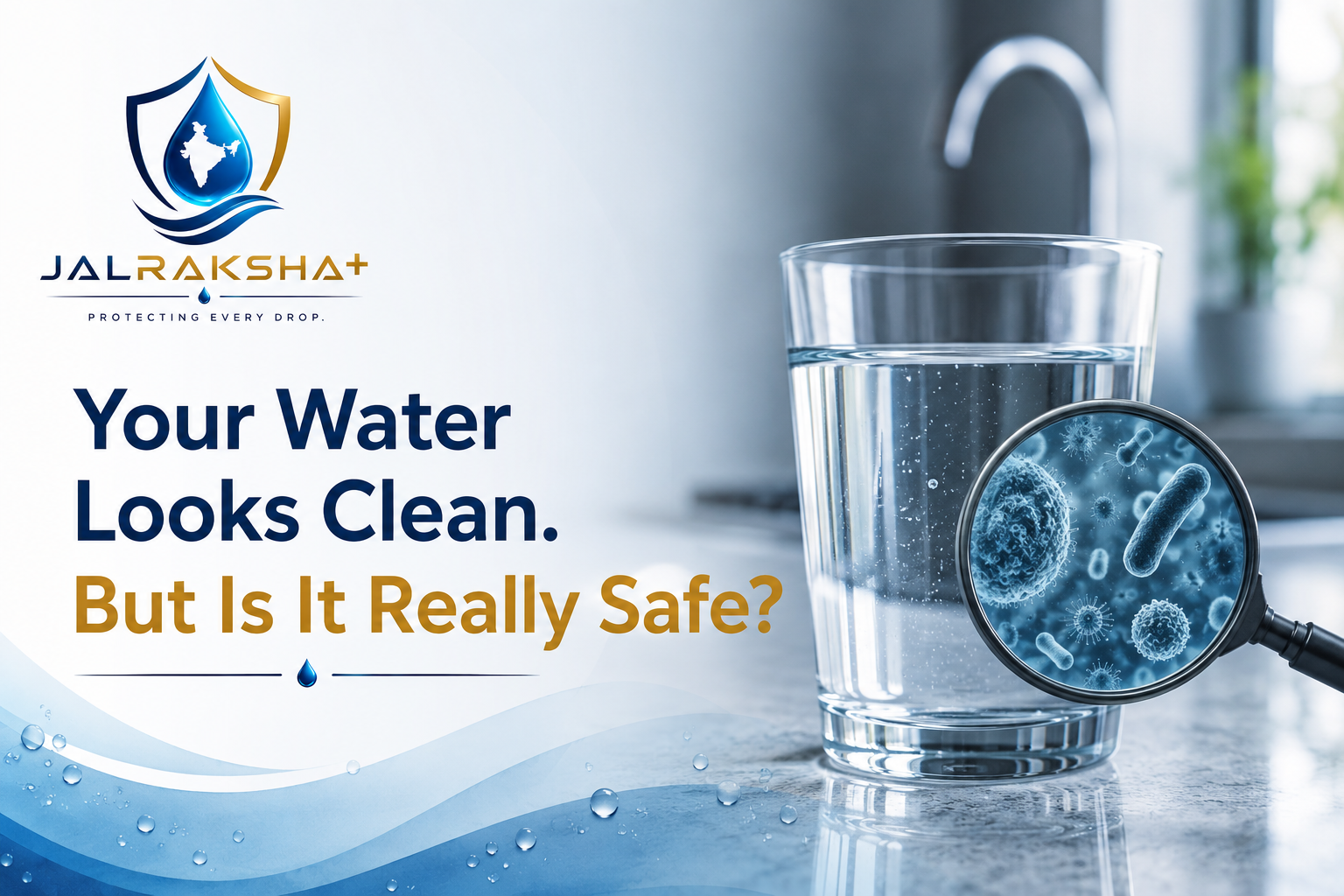
You pour a glass of water. It looks perfectly clear. It smells fine. It tastes normal.
But what if that water is silently carrying arsenic, bacteria, or heavy metals straight into your family’s body?
In India, the most dangerous water contamination is the kind you cannot see, smell, or taste. And right now, over 300 million households are drinking water without any way to know if it is truly safe.
The Invisible Crisis Hiding in India’s Water
India is facing one of the largest water safety emergencies in the world — and most families have no idea.
| 37.7 Million Indians affected by waterborne diseases every single year |
Consider the scale of this crisis:
• 600 million Indians live under water stress every day
• 70% of rural households have never had their water tested — not even once
• The economic toll? Over ₹73,000 crore lost annually to waterborne illnesses
• More than 61 different contaminants have been identified across Indian drinking water sources
This is not a problem limited to remote villages. Urban families drinking tanker water in Delhi, Bengaluru, and Mumbai face the same invisible risk. Borewell water in Rajasthan carries arsenic at 15 times the safe limit. Municipal pipelines corrode and introduce lead without anyone noticing.
Why Most Families Have No Idea Their Water Is Unsafe
The reason is devastatingly simple: contamination is invisible.
| MYTH | REALITY |
| If water looks clear, it must be safe | Arsenic, fluoride, lead, and bacteria are completely invisible to the naked eye |
| Boiling water makes it 100% safe | Boiling kills some bacteria but does NOT remove chemicals, heavy metals, or dissolved solids |
| My RO filter handles everything | RO membranes degrade silently over time — and no RO tells you when it has failed |
| Municipal water is government-tested | Testing happens at the plant — not at your tap. Contamination enters through old pipes, storage tanks, and supply interruptions |
There is no alarm. No warning. No signal at the point where it matters most — the moment you pour the glass.
Understanding What’s Actually in Your Water
You do not need a chemistry degree to understand water safety. Here are the basics every family should know:
TDS (Total Dissolved Solids)
TDS measures everything dissolved in your water — minerals, salts, metals. India’s BIS 10500 standard recommends below 500 ppm. Higher numbers mean more dissolved material, which may include harmful substances.
pH Level
This measures how acidic or alkaline your water is. Safe drinking water should fall between 6.5 and 8.5. A sudden shift in pH often signals that your water source has changed or been contaminated.
Turbidity
Turbidity measures clarity. Cloudy water often contains suspended particles — sediment, rust, or biological matter. Even slightly turbid water can harbour harmful bacteria.
Bacterial Contamination
This is the most dangerous and the hardest to detect. Bacteria like E. coli and coliform are completely invisible. They cause diarrhoea, typhoid, cholera, and hepatitis A. In children and elderly people, these infections can be fatal.
| DID YOU KNOW? A single glass of water contaminated with E. coli can cause illness within 12 hours. Yet E. coli is completely invisible, odourless, and tasteless. |
When Clean-Looking Water Sent a Family to the Hospital
In south Delhi, a family of five switched to tanker water delivery after their municipal supply became unreliable. The water looked perfectly normal. It tasted fine. The family drank it for three weeks.
Then their youngest child, a four-year-old, developed severe stomach cramps and fever. Within days, the mother and grandmother were also ill. The hospital diagnosed acute gastroenteritis caused by bacterial contamination.
Total hospital bill: ₹25,000.
The contamination source? The tanker. Water quality varied with every delivery, but the family had absolutely no way to know.
| A device costing ₹2,999 would have turned ORANGE the moment that contaminated tanker water entered their kitchen. One colour. One alert. One moment of awareness — and the entire hospital visit would have been avoided. |
What Families Currently Rely On — And Why It Falls Short
1. RO Purifiers: They clean water, but they stay completely silent when their membrane fails. No RO on the market tells you: “Warning — I’m no longer working properly.”
2. Boiling: Effective against some bacteria, but does nothing against chemicals, heavy metals, or dissolved solids. And nobody boils every glass of water, every day.
3. Lab Testing: Accurate — but it gives you a snapshot of one moment. By the time results arrive days later, your water source may have changed three times.
4. TDS Meters: They show a number. But what does “320” mean? Is that safe? Dangerous? A TDS meter cannot tell you. And it measures only one parameter.
| THE GAP: None of these solutions provide real-time, continuous safety awareness at the point of use. They react after the damage is done. Or they require you to take manual action every single time. |
What If You Could Know Instantly?
Imagine a world where you never have to wonder whether your water is safe.
Where a simple colour tells you everything: green means drink freely, orange means boil first, red means stop immediately, purple means your source has changed.
Where a clear voice in Hindi or English speaks the safety status aloud — so even a child or an elderly grandparent understands instantly.
Where the monitoring never stops — 24 hours a day, 7 days a week — without any app, internet connection, or technical knowledge.
This is not a fantasy. This is exactly what real-time water safety monitoring technology now makes possible. The concept is simple: continuous sensors watching your water, intelligent algorithms evaluating risk, and instant alerts the moment something changes.
Like a smoke alarm — but for your water.
What Every Indian Family Should Do Today
• Never assume water is safe just because it looks clear
• Know your water source — municipal, borewell, tanker, or mixed
• Understand that RO filters can fail silently — monitor, do not just trust
• Check water quality regularly, especially after monsoon, supply disruptions, or tanker changes
• Educate your family: teach children that clear water is not automatically safe water
| PROTECT YOUR FAMILY BEFORE IT’S TOO LATE Understand your water risk today. Learn how real-time monitoring works. Because the water crisis is not coming — it is already here. Visit jalrakshaplus.com to learn more. |